Hanzi Explained: The Oldest and Most Used Script Globally
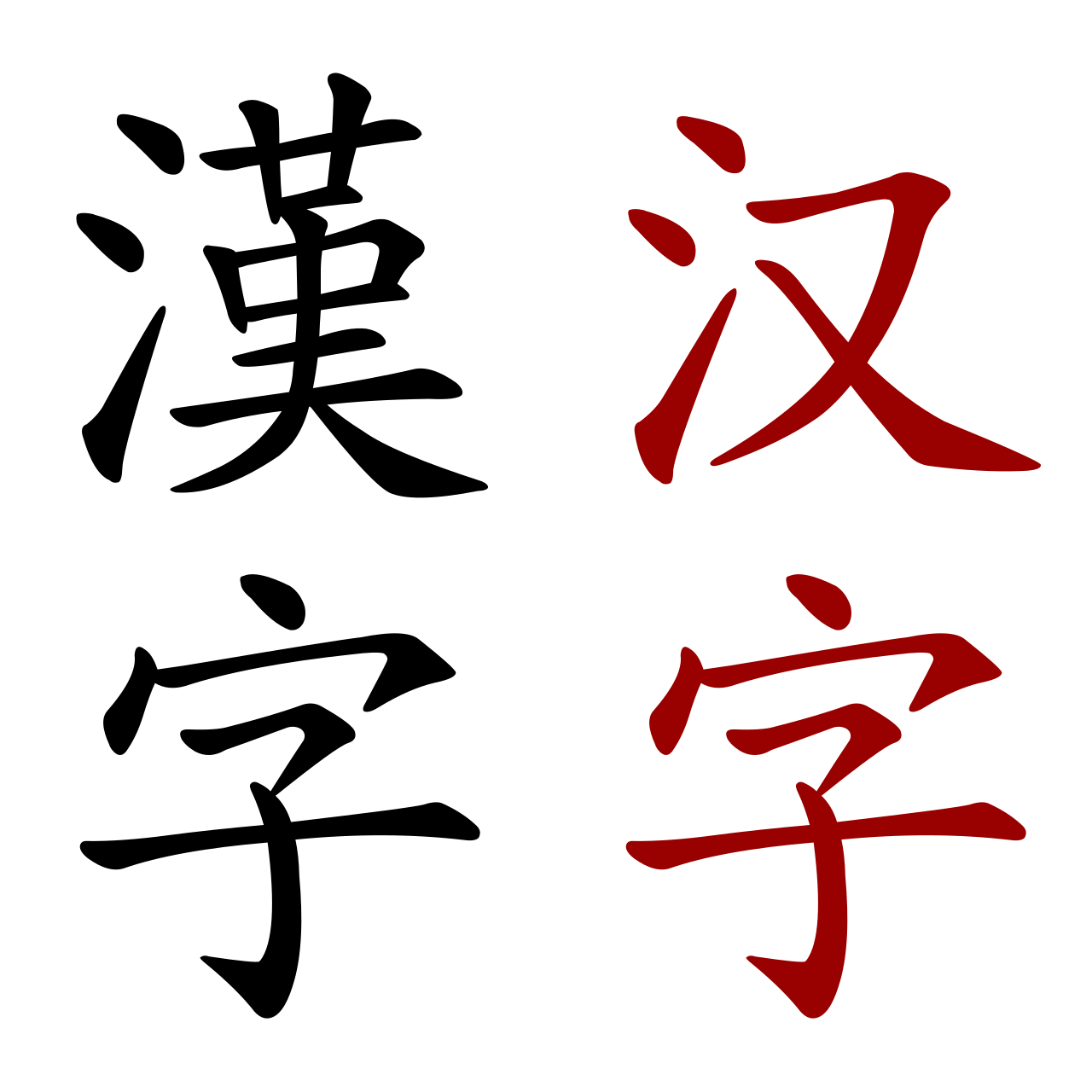
In the vast tapestry of global communication, few writing systems command the historical depth, widespread usage, and sheer complexity of Chinese characters, known as Hanzi (汉字 or 漢字). Often referred to in Dutch as "Chinees Schrift," this venerable script is not merely a means of communication; it's a profound cultural artifact, a cornerstone of East Asian civilization, and indeed, the oldest continuously used writing system in the world. Far from being a relic of the past, Hanzi remains a vibrant, essential component of daily life for over a billion people, making it one of the most utilized scripts on the planet.
Unlike an alphabet, which represents sounds, Hanzi operates as a logographic system. This means each character, or logogram, typically represents a complete word or morpheme (the smallest meaningful unit of language). This unique characteristic allows it to transcend dialectal differences within the Chinese language family, providing a unified written form across various spoken Chinese tongues, from Mandarin to Cantonese. But its influence stretches far beyond China's borders, deeply embedding itself in the writing systems of neighboring nations, most notably in Japan where it is known as Kanji, and historically in Korea (Hanja) and Vietnam (Chữ Nôm). To truly appreciate the enduring power of this incredible system, we must delve into its ancient origins, its intricate structure, and its unparalleled global reach.
The Enduring Legacy of Chinees Schrift: A Deep Dive into Hanzi's History
The story of Hanzi, or Chinese script, is a testament to human ingenuity and cultural persistence, stretching back thousands of years. Its roots can be traced to oracle bone script (甲骨文, *jiǎgǔwén*) from the late Shang Dynasty, roughly 3,500 years ago. These early inscriptions, found on tortoise plastrons and ox scapulae, were used for divination rituals and provide a fascinating glimpse into the nascent stages of one of the world's most sophisticated writing systems. From these ancient, pictographic beginnings, Hanzi underwent centuries of evolution, adapting to new materials, cultural shifts, and the demands of an expanding empire.
Over time, the characters transitioned from purely pictographic representations (like 日 for sun) to more complex forms, incorporating semantic and phonetic components. This process led to the development of the six traditional categories of character formation, including pictographs, ideographs, compound ideographs, and phono-semantic compounds, the latter of which makes up the vast majority of characters today. This incredible adaptability is precisely why the Chinese script has endured. While many ancient writing systems have faded into obscurity or been replaced by alphabetic scripts, Hanzi has continuously evolved, absorbing new concepts and technologies while retaining its fundamental structure. Its continuous use through successive dynasties, from the Bronze Age to the digital age, underscores its remarkable resilience and cultural significance. The consistent presence of this "Chinees Schrift" through millennia is not just an academic curiosity; it reflects a continuous cultural thread that binds generations.
Understanding Hanzi: Logograms, Sound, and Meaning
At its core, Hanzi is a logographic script, a concept that often fascinates and sometimes challenges learners accustomed to alphabetic systems. In an alphabet, each letter represents a sound, and words are built by stringing these sounds together. With Hanzi, each character is a logogram, representing a complete word or morpheme, and thus a distinct concept or idea. For instance, the character 木 (mù) means "tree," while 林 (lín) combines two trees to mean "forest," and 森 (sēn) combines three trees for "dense forest." This visual representation of meaning allows for a depth of nuance and association that is unique to such a system.
While each character primarily conveys meaning, it also has a pronunciation, usually a single syllable. However, unlike alphabetic letters where sound is explicit, the sound of a Hanzi character often needs to be learned independently or inferred from phonetic components within a larger character. This is why learning Chinese involves memorizing both the appearance and the sound (and tone) of each character. The Chinese Pinyin system, which uses the Latin alphabet to represent the sounds of Mandarin Chinese, serves as an invaluable tool for pronunciation guidance.
The sheer volume of Hanzi characters can seem daunting. There are tens of thousands of characters in existence, with comprehensive dictionaries listing upwards of 50,000 to 100,000. However, for practical literacy, the number is much more manageable. An educated Chinese speaker typically knows around 8,000 characters, while understanding 2,000 to 3,000 characters is often sufficient to read newspapers and most general texts. This distinction between the vast historical corpus and practical daily usage is crucial for understanding the accessibility of this intricate "Chinees Schrift."
Traditional vs. Simplified: Navigating the Nuances of Chinese Characters
One of the most significant developments in the history of Hanzi in the 20th century was the division into traditional and simplified character sets. This bifurcation came about largely due to political and social reforms aimed at increasing literacy.
* **Traditional Characters (漢字):** These are the original, more complex forms of Chinese characters that have been in use for centuries. They are characterized by a higher number of strokes and often retain more of their ancient pictographic or ideographic components. Traditional characters are predominantly used in Taiwan, Hong Kong, Macau, and by many overseas Chinese communities. They represent a direct link to the historical and cultural heritage of Chinese civilization.
* **Simplified Characters (汉字):** Introduced by the government of the People's Republic of China in the 1950s, simplified characters were created to streamline the writing process and make learning Chinese easier, thereby boosting literacy rates across mainland China. This involved reducing the number of strokes in many characters, merging some characters, and standardizing others. Simplified characters are now the standard script in mainland China, Singapore, and Malaysia.
The choice between learning traditional or simplified characters often depends on the region a learner wishes to focus on. Both forms are equally valid and represent the same underlying language, but they offer distinct pathways into understanding the rich tapestry of the Chinese script. Exploring these differences further can provide invaluable insight into how modern Chinese societies have approached their linguistic heritage. For a deeper dive into these variations, you might find our article
Decoding Hanzi: Exploring Traditional and Simplified Characters particularly insightful. Understanding this duality is key to grasping the full scope of "Chinees Schrift" in the modern world.
Hanzi's Reach Beyond China: The Influence on East Asian Scripts
The influence of Hanzi extends far beyond the borders of China, casting a long and profound shadow across the entire Sinoshere. Historically, as Chinese culture, philosophy, and governance spread, so too did its writing system. Neighboring countries adopted Hanzi, adapting it to their own languages and linguistic structures, creating a legacy that continues to shape East Asian writing to this day.
The most prominent example of this adoption is the Japanese writing system, where Chinese characters are known as **Kanji**. Kanji forms one of the three main components of written Japanese, alongside the phonetic syllabaries of Hiragana and Katakana. While Kanji characters retain their core meanings from Hanzi, their pronunciations and sometimes their stylistic forms have been adapted to fit the Japanese language. Many Kanji characters are directly derived from traditional Hanzi, and understanding the shared roots can greatly aid in learning both languages.
Similarly, in Korea, Chinese characters known as **Hanja** (한자) were historically the primary writing system. Although the Hangul alphabet has largely replaced Hanja in modern Korean writing, Hanja are still studied in schools and appear in academic texts, newspapers (often to clarify homonyms), and calligraphy. In Vietnam, **Chữ Nôm** (𡨸喃) was a historically developed system that adapted Chinese characters to write the vernacular Vietnamese language, before the adoption of the Latin-based Quốc ngữ script.
This historical adoption and adaptation highlight the incredible versatility and foundational importance of the Chinese script. It's a testament to the power of Hanzi that it could serve as the bedrock for such diverse languages and cultures, demonstrating its role not just as a national script, but as a regional lingua franca of literacy and knowledge for centuries. To truly appreciate this interconnectedness, delve into our related article
Chinese Characters to Kanji: Understanding East Asian Writing, which explores these fascinating linguistic relationships in greater detail. The enduring global reach of this "Chinees Schrift" underscores its unparalleled historical significance.
Conclusion
Hanzi, the Chinese script, stands as a monumental achievement in human history. As the oldest continuously used writing system, it has not only preserved millennia of Chinese culture, philosophy, and literature but has also profoundly influenced the linguistic landscapes of its East Asian neighbors. From its ancient origins on oracle bones to its modern forms, encompassing both traditional and simplified characters, Hanzi remains a dynamic, living script essential to global communication and cultural exchange. Its unique logographic nature, conveying meaning rather than just sound, offers a rich depth that alphabetic systems cannot replicate, and its widespread use solidifies its position as one of the most important writing systems in the world. Whether you approach it as a student, a linguist, or a curious observer, the complexity, beauty, and enduring legacy of this "Chinees Schrift" are undeniable and continue to inspire wonder and fascination across the globe.