Understanding Chinees Schrift: The Foundation of East Asian Characters
When we delve into the intricate world of East Asian writing systems, particularly those of China and Japan, we inevitably encounter the concept of "characters." These powerful symbols are the backbone of both languages, offering a fascinating journey through history, culture, and linguistics. The term
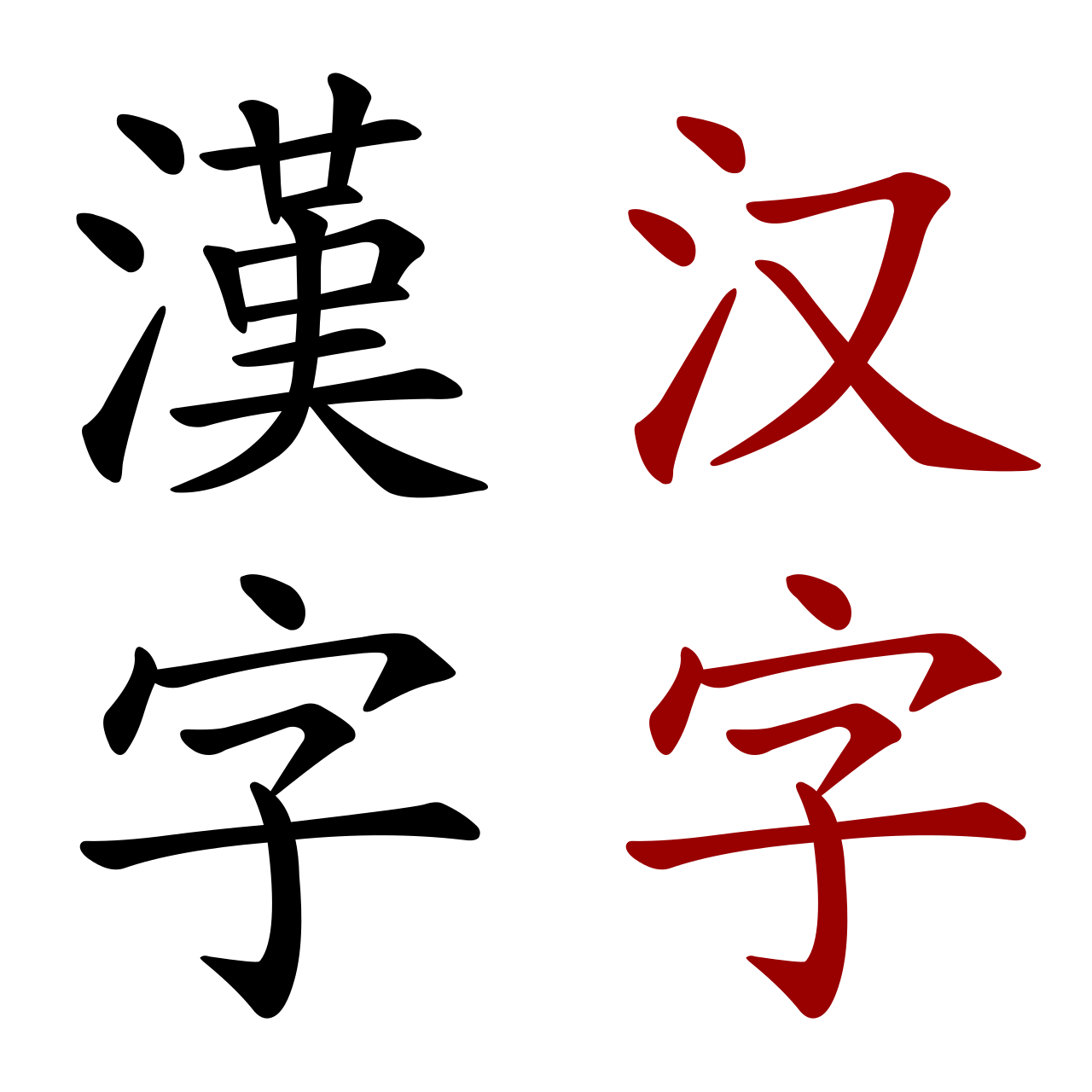
"Chinees Schrift", or Chinese Script, refers to the logographic system known as Hanzi ( simplified: 汉字; traditional: 漢字; pinyin: hànzì). It's a system unique in its longevity and global impact, serving as the direct ancestor to a significant portion of the Japanese writing system: Kanji.
Unlike alphabetic scripts where letters represent sounds, "Chinees Schrift" is logographic, meaning each character (or logogram) typically represents a complete word or morpheme and is associated with a full sound. This ancient system is not only the oldest continuously used script in the world but also one of the most widely utilized, profoundly influencing cultures across the Sinoshere. With tens of thousands of characters, many being graphical variants, mastering "Chinees Schrift" is a monumental yet rewarding endeavor. Understanding its origins and evolution is crucial to appreciating its enduring legacy, especially its intimate connection to Japanese Kanji.
The Historical Bridge: From Hanzi to Kanji
The journey of Chinese characters into Japan is a testament to cultural exchange and adaptation. Beginning as early as the 1st century AD, and intensifying around the 5th and 6th centuries with the introduction of Buddhism and Chinese political systems, Japan adopted the characters of "Chinees Schrift" wholesale. At this time, Japan did not possess its own indigenous writing system, making the sophisticated Chinese characters an invaluable tool for record-keeping, governance, and religious texts.
The initial adoption was pragmatic: to write Japanese words using Chinese characters based on their meaning or, sometimes, their approximate sound. This process was complex, as the Japanese language has a vastly different grammatical structure and phonetic system than Chinese. Over centuries, these adopted characters became an integral part of the Japanese language, evolving into what we now know as Kanji (漢字, literally "Han characters").
The influx of Chinese culture and writing brought not just the characters themselves, but also new concepts, technologies, and philosophies that enriched Japanese society. This historical bridge underscores the profound and enduring influence of "Chinees Schrift" across East Asia, shaping not only how languages are written but also how cultures perceive and express the world.
Kanji's Unique Role in Japanese Writing
While Kanji are fundamentally Chinese characters, their integration into the Japanese writing system is unique and multifaceted. Modern Japanese is written using a combination of three distinct scripts: Kanji, Hiragana, and Katakana. This blend makes Japanese one of the most graphically diverse languages in the world.
* **Kanji (漢字):** Primarily used for nouns, verb stems, adjective stems, and proper names. They carry semantic meaning, much like in "Chinees Schrift." For example, the character for "person" is 人, which directly corresponds to its Chinese counterpart.
* **Hiragana (ひらがな):** A phonetic syllabary, primarily used for grammatical particles, verb and adjective inflections, and native Japanese words that do not have a Kanji or whose Kanji is deemed too difficult. Hiragana evolved from simplified Kanji.
* **Katakana (カタカナ):** Another phonetic syllabary, mainly used for foreign loanwords, onomatopoeia, and emphasis. Katakana also originated from simplified components of Kanji.
The most distinctive feature of Kanji in Japanese is the concept of multiple readings. A single Kanji can often have several pronunciations, broadly categorized into:
* ***On'yomi*** (音読み): The "sound reading," derived from the original Chinese pronunciation of the character when it was introduced to Japan. These readings are often used in compound words (熟語, *jukugo*). For instance, the Kanji for "water," 水, has an *on'yomi* like *sui*.
* ***Kun'yomi*** (訓読み): The "meaning reading," which is based on the pronunciation of native Japanese words that correspond to the meaning of the Kanji. These are typically used when a Kanji stands alone or forms part of an adjective or verb. For example, 水 also has a *kun'yomi* like *mizu* (water).
This dual-reading system adds a layer of complexity not present in "Chinees Schrift" itself, reflecting the Japanese language's efforts to adapt an external writing system to its internal linguistic structure. Mastering the interplay between these three scripts and the various readings of Kanji is central to achieving fluency in written Japanese.
Navigating Similarities and Divergences in East Asian Characters
While Kanji and "Chinees Schrift" (Hanzi) share a common lineage, their evolutionary paths and modern applications reveal both striking similarities and significant divergences. Understanding these nuances is key to appreciating the linguistic landscapes of China and Japan.
Shared Roots and Recognizable Forms
At their core, many characters in Kanji and Hanzi retain similar forms and meanings. A Chinese reader can often grasp the general meaning of a Japanese text, and vice versa, simply by recognizing the Kanji. For example, characters like 山 (mountain), 川 (river), or 木 (tree) are instantly recognizable in both scripts and carry the same fundamental meaning. This shared heritage underscores the powerful visual communication inherent in logographic systems.
Evolutionary Paths: Simplification and Standardization
One of the most notable divergences lies in character simplification. After World War II, both mainland China and Japan undertook significant reforms to their writing systems to promote literacy.
* **China's Simplified Characters (
Simplified Chinese Characters):** Introduced in the 1950s and 60s, these characters often reduce the number of strokes or alter components to make writing easier and faster. For example, 語 (language) became 语. These are predominantly used in mainland China, Singapore, and Malaysia.
* **Japan's Shinjitai (新字体, "new character forms"):** Japan also introduced its own set of simplified Kanji in 1946. While some simplifications overlap with China's, many are unique to Japan. For example, 國 (country) became 国. Traditional Chinese characters (繁體字, *Fántǐzì*) continue to be used in Taiwan, Hong Kong, and Macau.
These differing simplification efforts mean that while a character might look similar, its exact stroke count or radical components can vary significantly between modern Chinese and Japanese, and even between traditional and simplified Chinese.
Contextual Use and Pronunciation
Beyond form, the contextual use and pronunciation present clear distinctions:
* **Pronunciation:** As discussed, Kanji in Japanese possess *on'yomi* and *kun'yomi*, making pronunciation context-dependent. Hanzi, while also having variations in tones and pronunciations across different Chinese dialects, generally has one primary Mandarin pronunciation per character in modern standard Chinese.
* **Grammatical Function:** In Chinese, each character typically functions as a word or a building block for compound words. In Japanese, Kanji primarily convey lexical meaning, while Hiragana handles grammatical inflections and particles, a fundamental structural difference.
These distinctions highlight how two languages, starting from the same "Chinees Schrift" foundation, developed unique and complex writing systems tailored to their respective linguistic needs.
Tips for Understanding and Learning East Asian Characters
Embarking on the journey to learn Chinese characters (Hanzi) or Japanese Kanji can seem daunting, but with the right approach, it's an incredibly rewarding experience.
1. Focus on Radicals and Components
Both Hanzi and Kanji are often built from smaller, recurring components known as radicals (部首, *bùshǒu* in Chinese, *bushu* in Japanese). Learning these ~200 radicals is like learning an alphabet for characters. They often provide clues about a character's meaning or sound. For example, characters related to water often contain the radical 氵.
2. Master Stroke Order
Consistency in stroke order is crucial. It helps with memorization, ensures legibility, and is essential for writing calligraphy. Most characters follow a logical pattern: top to bottom, left to right, horizontal before vertical, outside before inside, etc.
3. Differentiate Between Traditional and Simplified
If your goal is to learn "Chinees Schrift," decide whether you want to focus on
simplified or traditional characters. While simplified are more common in mainland China, traditional are still prevalent in Taiwan and Hong Kong. For Japanese, learn Shinjitai.
4. Understand Kanji Readings (On'yomi vs. Kun'yomi)
For Japanese learners, actively differentiate between *on'yomi* and *kun'yomi*. *On'yomi* often appears in compound words (e.g., 大学, *daigaku* for university), while *kun'yomi* typically accompanies a standalone Kanji or verb conjugations (e.g., 食べる, *taberu* for to eat). Context and practice are your best guides.
5. Use Spaced Repetition Systems (SRS)
Tools like Anki are invaluable for memorizing characters, their meanings, and pronunciations. Regularly reviewing flashcards helps embed characters in your long-term memory.
6. Immersion and Context
Don't just memorize characters in isolation. Read, listen, and speak. Seeing characters in context, whether in books, news articles, or everyday signs, reinforces learning and helps you understand their practical application.
7. Practice Writing by Hand
While digital input is common, physically writing characters helps develop muscle memory and a deeper understanding of their structure. Even a few minutes a day can make a difference.
8. Leverage Digital Tools
Dictionary apps (like Pleco for Chinese or Jisho for Japanese), OCR tools, and drawing recognition features can greatly assist in looking up unknown characters and learning their details.
Learning these complex scripts is a journey of patience and persistence. Embrace the challenge, and you'll unlock a deeper understanding of East Asian cultures and languages.
Conclusion
The connection between "Chinees Schrift" (Hanzi) and Japanese Kanji is a powerful narrative of cultural exchange, adaptation, and linguistic evolution. From their shared ancient origins as logographic symbols to their distinct modern forms and uses, these characters represent more than just written words; they embody centuries of history, philosophy, and artistic expression. While Chinese characters remain the cornerstone of Chinese languages, their ingenious adoption and transformation into Kanji have endowed Japanese with a richness and complexity that is truly unique. Understanding this relationship not only deepens our appreciation for East Asian writing systems but also highlights the remarkable human capacity for linguistic innovation and cultural transmission across borders.